Navigating Manila’s Logistics Maze With AI Precision
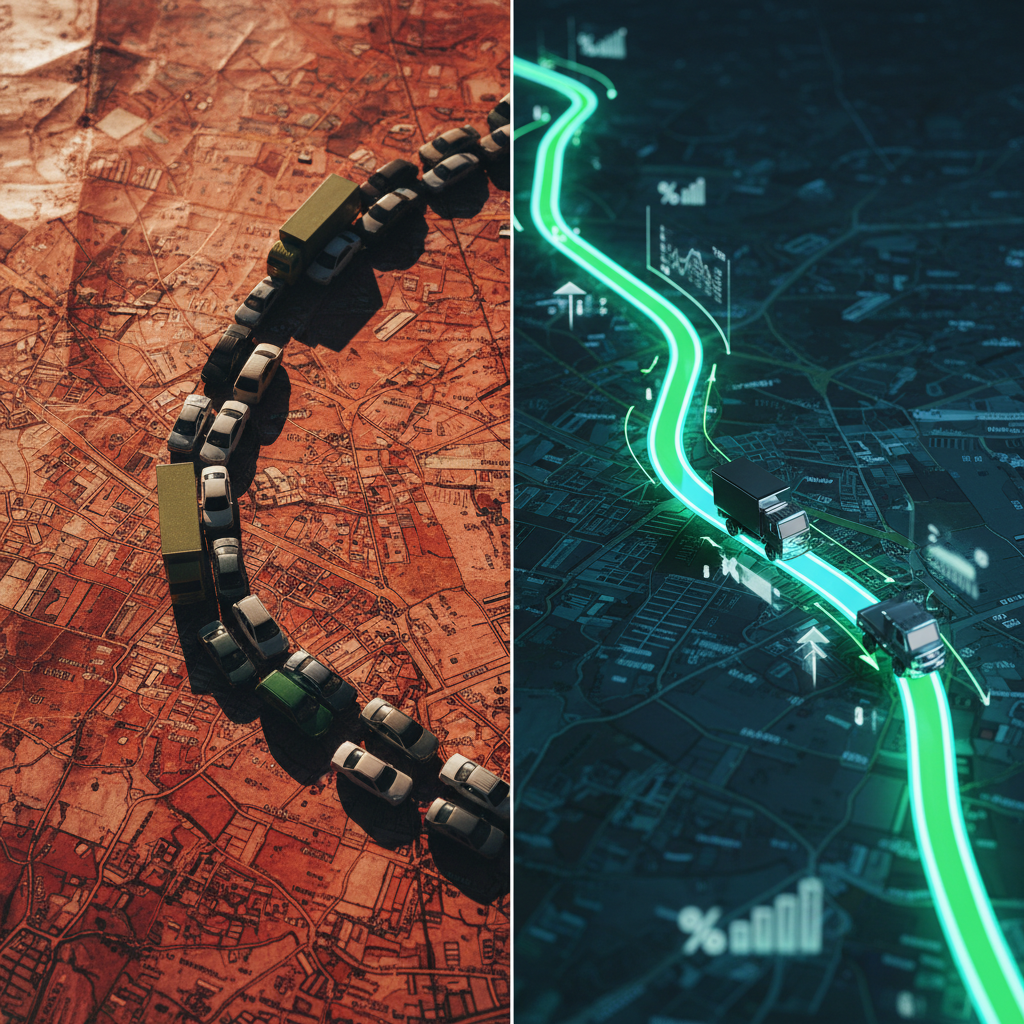
What are the AI advantages for Manila Logistics?
AI transforms Manila logistics by utilizing Dynamic Route Optimization (DRO) to bypass gridlocks in high-congestion zones like Port Area and C-5. By analyzing real-time traffic patterns, AI reduces fuel consumption by up to 30% and lowers the Philippines' notoriously high logistics costs—currently averaging 27% of sales—ensuring on-time delivery despite unpredictable road conditions.
The Logistics Industry is Currently Suffering from a “Blind Spot”
If your fleet is stuck on EDSA, you aren't just losing time; you are hemorrhaging capital. The logistics sector in the Philippines operates with a massive handicap: a lack of real-time visibility into the chaotic variables of Metro Manila traffic.
Traditional dispatch methods rely on historical knowledge—drivers knowing “shortcuts” through Makati or Pasig. But in 2025, “gut feeling” is not a strategy. It is a liability.
While the global average for logistics costs hovers around 8% of sales, the Philippines is bleeding out at nearly four times that rate. The bleed isn't just fuel; it's the inability to predict the unpredictable.
By The Numbers: The Cost of Inefficiency
- 27.16% of Sales: The staggering portion of revenue consumed by logistics costs in the Philippines, the highest in Southeast Asia.
- ₱3.5 Billion: The daily economic loss Metro Manila incurs due to traffic congestion, a figure expected to nearly double by 2030 without AI intervention.
- $1.025 Billion: The projected value of the Philippine AI market in 2025, driven largely by enterprise adoption in supply chain optimization.
The “Manila Choke”: Why Generic AI Fails
Simply buying a generic AI tool off the shelf won't solve the unique topography of Metro Manila. A standard GPS doesn't understand that a delivery truck can't turn left at Taft Avenue during rush hour, or that the South Harbor truck ban hours have shifted.
Generic AI creates "Ghost Routes"—paths that look efficient on a map but are physically impossible due to local barangay restrictions or unplanned roadworks in Parañaque.
True revenue protection requires a hybrid approach: AI to process the massive data sets of traffic flow, and human oversight to apply the local context of the Philippine archipelago.
Logistics Evolution: From Manual to Hybrid
| Feature | The Old Way (Human Only) | The Ghost Way (AI Only) | The LocalEnhance Way (Hybrid) |
|---|---|---|---|
| Route Planning | Static, based on driver memory. Vulnerable to sudden C-5 accidents. | Mathematically perfect but ignores local context (e.g., narrow barangay roads). | Real-time adaptive. AI suggests routes; local logic verifies feasibility. |
| Cost Efficiency | High fuel waste due to idling in Pasig gridlocks. | Saves fuel theoretically, but incurs costs when trucks get stuck or fined. | Revenue Protection. Optimizes for fuel AND avoids violation penalties. |
| Customer Updates | Manual calls or SMS. Often late or inaccurate. | Automated spam. Lacks empathy or specific details. | Predictive Alerts. AI predicts delays; humans manage the relationship. |
Future-Proofing Your Supply Chain
The companies that survive the next five years will not be the ones with the most trucks. They will be the ones with the best data.
Integrating Predictive Analytics allows you to forecast demand spikes in Quezon City before they happen, positioning your inventory closer to the customer. This moves you from a reactive "fire-fighting" mode to a proactive "revenue-generating" mode.
Don't let your profits evaporate in traffic. The technology exists to reclaim that 27% bleed.
Ready to future-proof your business?
Stop guessing and start optimizing with data-driven strategies tailored for the Philippines.
Partner with LocalEnhance today