Capture Travelers Early: The Local Guide Strategy
The Hidden Bleed in Hotel Marketing
The hotel industry is currently suffering from OTA dependency and AI invisibility. While you fight for parity on booking engines, your potential guests are asking ChatGPT for itineraries or searching Google for "hidden gems in Manila." If your hotel isn't the one answering those questions, you don't exist in their travel plans.
We are seeing a massive shift in how travel is consumed. It is no longer just about searching for a room; it is about searching for an experience. If you treat your website as a digital brochure rather than a local authority, you are bleeding direct bookings to platforms that charge you 15-30% commissions.
Industry Intelligence: By The Numbers
- 3,500% Surge in AI Planning: Adobe Analytics (2025) reports a massive spike in travelers using Generative AI to plan full itineraries before looking for accommodation.
- 80% OTA Check: According to Navan (2025), 4 out of 5 travelers visit an Online Travel Agency for research, but 29% still prefer direct bookings if the value is clear.
- 58% Seek "Authenti-cities": Accor's 2025 data shows a pivot away from tourist traps. Travelers want "hidden gems," and they trust local guides over generic listings.
The "Local Guide" Strategy Explained
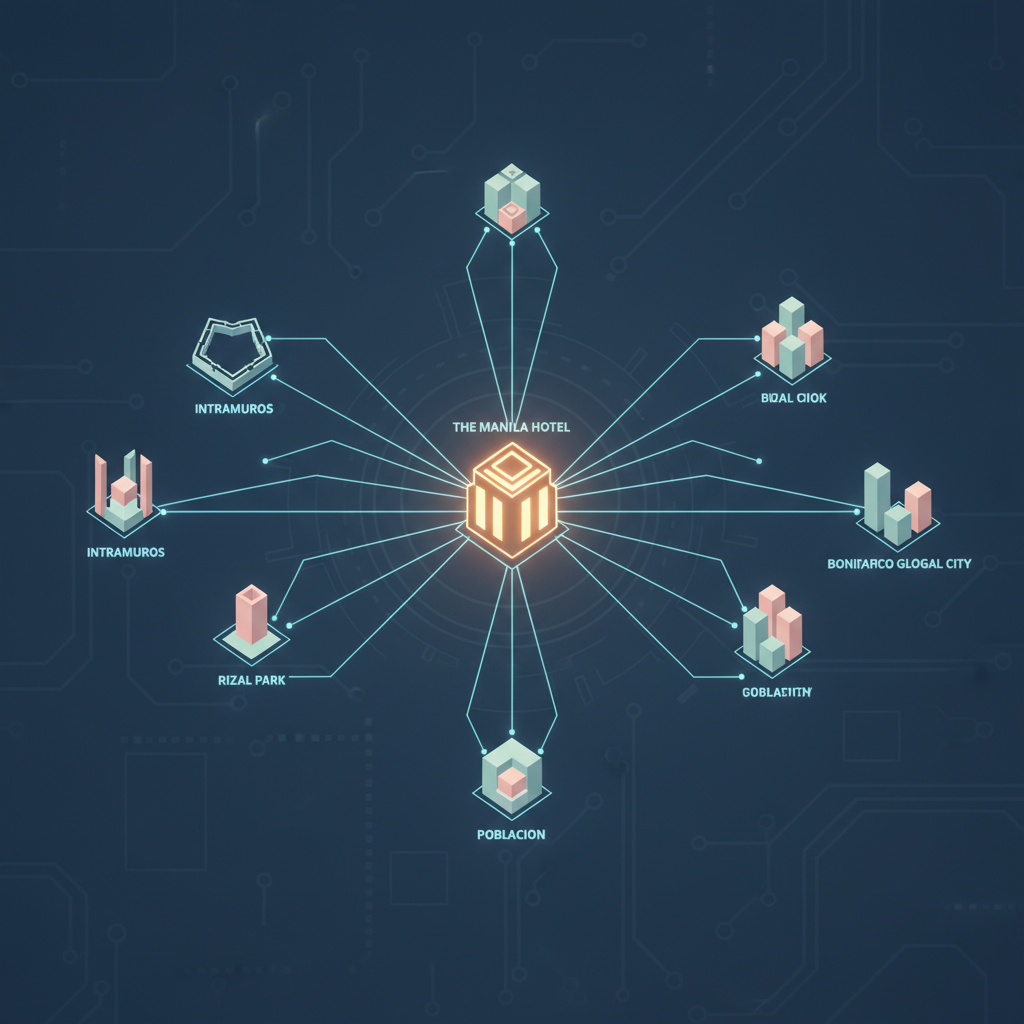
To rank for "Things to do in [City]," you cannot simply list five museums and call it a day. You must build a Knowledge Graph that anchors your hotel to the local geography. This tells search crawlers that your property is the logical starting point for exploring the area.
Local Anchoring: The Manila Context
Let's look at Poblacion, Makati. A standard hotel blog might list "Best Bars in Makati." A GEO-Optimized guide lists specific routes: walking from your hotel to the Rockwell Center for brunch, then moving to Algier Street for nightlife. This physically links your entity (the hotel) to the destination entity.
Similarly, a hotel near Intramuros should not just mention "history." It should provide a curated "Golden Hour Walking Guide" starting at Fort Santiago and ending at your hotel lobby for a sunset cocktail. This creates a data relationship that AI algorithms prioritize when answering: "Where should I stay in Manila for a historical trip?"
Evolution of the Travel Guide
| The Old Way (Human Only) | The Ghost Way (AI Only) | The LocalEnhance Way (Hybrid) |
|---|---|---|
| Generic "Top 10" lists hidden in a PDF or deep blog page. | AI-generated generic text without specific geolocation or nuances. | Structured content clusters linking the Hotel Entity to Local Landmarks. |
| Relying on human readers to find the content manually. | Keyword stuffing that reads like robot noise and gets penalized. | Schema-rich HTML that feeds "Answer Engines" (Perplexity, Gemini). |
| Zero connection between the guide and the booking engine. | High bounce rate due to lack of real, actionable insight. | Direct "Book Now" integration contextually placed within the itinerary. |
Why This Protects Your Revenue
When you provide the itinerary, you own the trust. When a traveler finds your guide on "The Ultimate 48 Hours in BGC," they perceive your hotel as the expert host. This psychological shift moves them from "comparing prices" to "securing the experience."
This is Revenue Protection. Every user who lands on your guide is a user who didn't land on TripAdvisor or Booking.com first. You save the commission, you own the data, and you secure the guest.
Ready to future-proof your business? Partner with LocalEnhance today.
SECURE YOUR REVENUE