Hotel Disambiguation: The Missing Key to Revenue
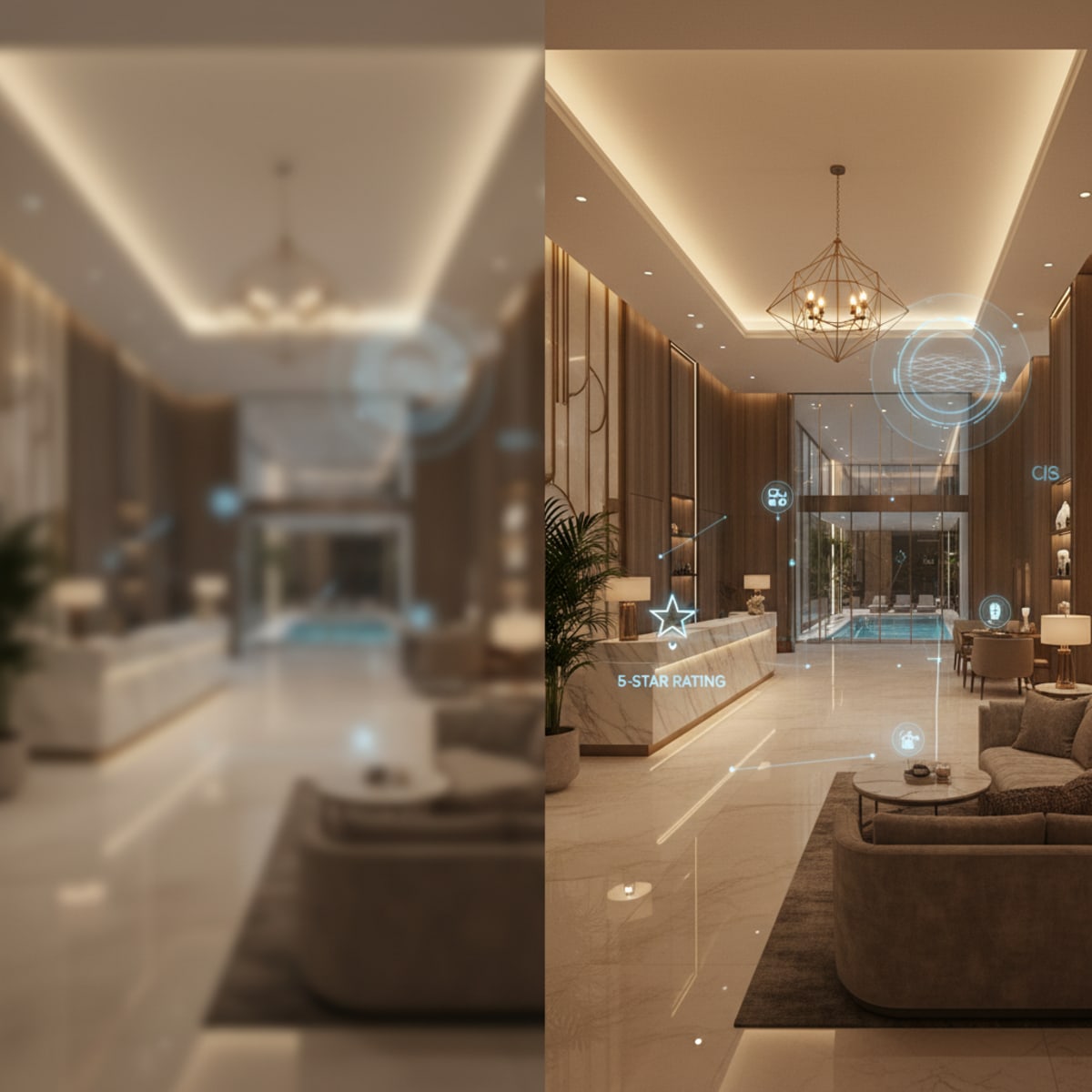
What is Hotel Disambiguation in SEO?
Hotel Disambiguation is the technical process of using Schema Markup and Entity Anchoring to clearly distinguish your property from similarly named locations or generic industry terms. It ensures AI search engines (like ChatGPT and Google Gemini) recognize your hotel as a specific entity with unique amenities, rather than confusing it with competitors in high-density hubs like Makati CBD.
The Hotel Industry's Identity Crisis
The Hotel industry is currently suffering from a silent "bleed"—an identity crisis where your property is invisible to the machines that now control travel booking.
In the past, ranking for "Hotel in Manila" was enough. Today, AI crawlers view that as Beige Noise. If a potential guest asks ChatGPT for a "business hotel near NAIA with a smoking area," and your digital entity isn't disambiguated, you don't just lose a click; you don't even exist in the answer.
The modern traveler is not searching; they are prompting. If your hotel lacks the structured data to stand out from the noise of Ermita or the high-stakes competition of Entertainment City, you are effectively closed for business on the AI web.
By The Numbers: The Silent Bleed
- 60% of Searches End Here: In 2025, approximately 60% of searches are "Zero-Click," meaning the user gets their answer from the results page without ever visiting a website (The Digital Bloom, 2025).
- The AI Takeover: AI adoption in the travel sector is projected to grow at a Compound Annual Growth Rate (CAGR) of 30.5% through 2028 (World Travel & Tourism Council, 2025).
- The Winner Takes All: Hotels ranking in the top 3 local results receive 500% more traffic than lower-ranked listings (Mission Morph, 2025).
Why Disambiguation Matters in Metro Manila
Let's diagnose the problem locally. Take the Ortigas Center. It is packed with hospitality entities. To a human, the difference between a "Joy Nostalg" and a "Marco Polo" is clear based on brand perception.
To an AI crawler, however, without Disambiguation (specific Schema coding), these are just two clusters of text with overlapping keywords like "pool," "suite," and "Pasig."
The Bleed happens here: When an AI cannot be 100% certain which hotel offers "24-hour check-in," it defaults to the entity with the strongest Knowledge Graph—usually a global chain or an OTA (Online Travel Agency) that takes a 20% commission from you.
The Strategy Comparison
Most hotels are still operating on a playbook from 2018. Here is the diagnostic difference between how you are likely operating and how the market leaders are winning.
| The Old Way (Human Only) | The Ghost Way (AI Only) | The LocalEnhance Way (Hybrid) |
|---|---|---|
| Focuses on "Keywords" (e.g., Best Hotel Manila). | Relying solely on Auto-Generated listings. | Entity-First: Linking "Pool" to specific dimensions and opening hours in Schema. |
| Vague location descriptions ("Near the mall"). | No local context, just GPS coordinates. | Hyper-Local Anchoring: "Located 500m North of SM Mall of Asia." |
| Hopes for clicks to the homepage. | Zero brand control. | Revenue Protection: Owning the Answer so the AI recommends you directly. |
Fixing the Signal
Disambiguation requires a shift from "telling stories" to "defining facts." Your website code must explicitly tell search engines: "We are not just a hotel; we are the hotel that contains this specific restaurant, located in this specific suburb of Manila."
This creates a digital fingerprint that no competitor can copy. It secures your revenue against the rise of Zero-Click searches.
Ready to future-proof your business? Partner with LocalEnhance today.
Secure Your Revenue Now